
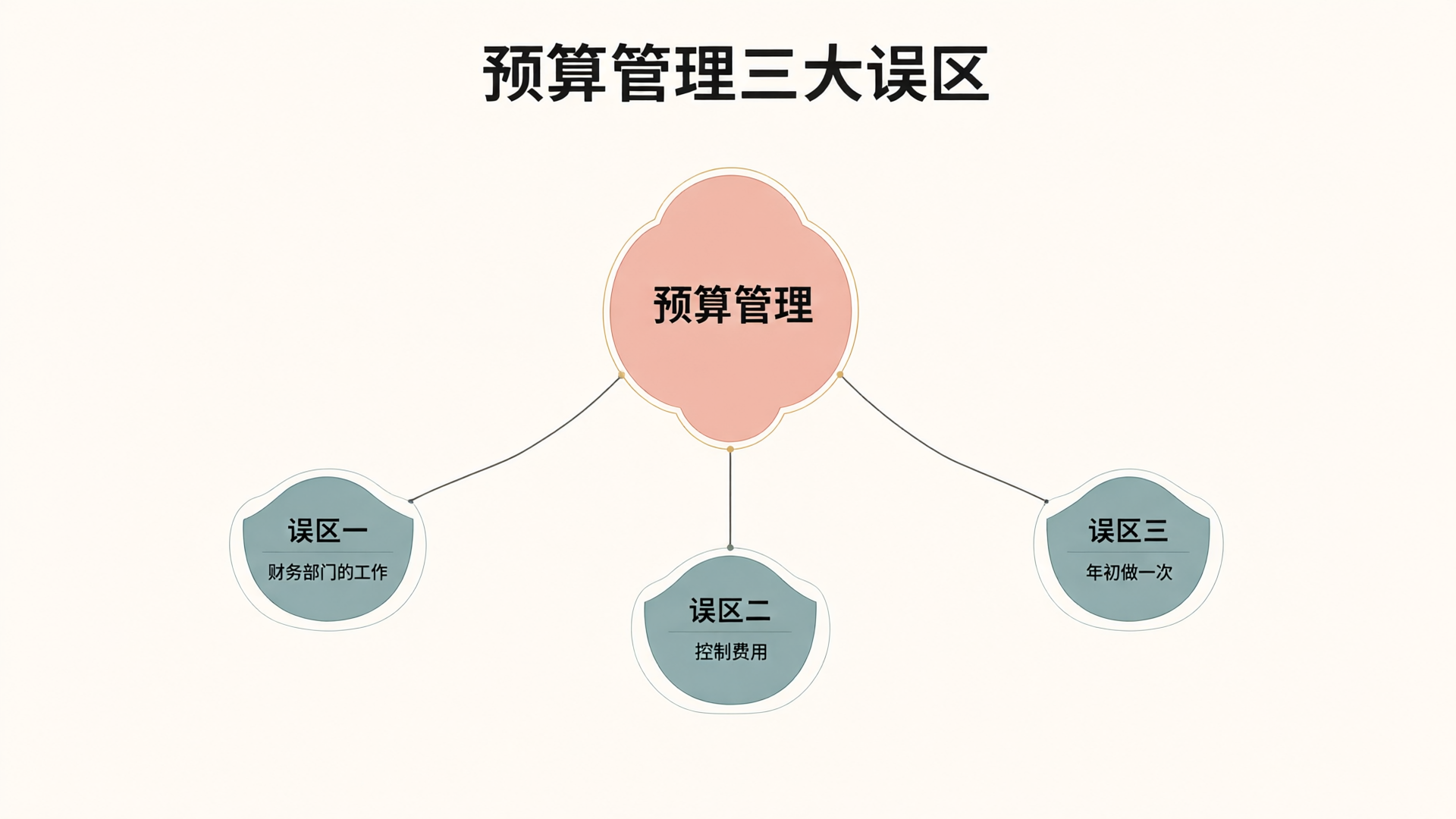
At the start of each year, finance teams at many small and mid-sized manufacturing companies launch a routine task: annual budgeting. Sales submits revenue forecasts, production submits capacity plans, procurement submits material requirements, and finance consolidates everything into a single spreadsheet. The process appears complete, yet by mid-year reviews, most companies discover a critical gap: budget figures diverge sharply from actual operations. The carefully prepared budgets end up as mere reference documents.
This is not an isolated case. Based on our experience serving manufacturing clients, over 70% of small and medium-sized manufacturers go through a phase where budgets are created but cannot be effectively used when implementing comprehensive budget management for the first time. The issue isn't a lack of management awareness; rather, it stems from misconceptions held by leadership about several key issues before launching the budget process. If these misconceptions aren't addressed, even a well-structured budget system will struggle to truly support operational decision-making.
Misconception 1: Budgeting is solely the finance department's responsibility
This is the most common misconception among small and medium-sized manufacturing enterprises. Many business owners treat budgeting as a purely financial task, assuming that if the finance department is professional enough, it can produce an accurate budget. Under this approach, the budgeting process becomes a "solo performance" by finance: sales provides a rough revenue figure, production reports its capacity ceiling, procurement estimates material costs based on historical data, and finally, finance staff consolidate and balance everything.
The core issue with this division of labor is that it reduces budgeting to a simple number aggregation process. In reality, a budget is the digital expression of an operational plan. An effective budget must address far more than just "how much to spend next year." It needs to answer complex questions: How will the order mix change? Which products are seeing margin erosion? Where are the capacity bottlenecks? And how can we hedge against raw material price volatility? The answers to these questions are scattered across various business functions and cannot be solved by finance alone.
While serving a hardware manufacturing company with an annual output value of approximately 8000 million yuan, we found that its budget variance exceeded 30% for two consecutive years. Our in-depth investigation revealed that the production department failed to account for the ramp-up schedule of new equipment when preparing the budget, and the sales department's forecast did not include key customers' product iteration plans. As a result, the finance team could only perform basic arithmetic on figures submitted by various departments, leading to budgets that failed to reflect the company's actual operational logic.
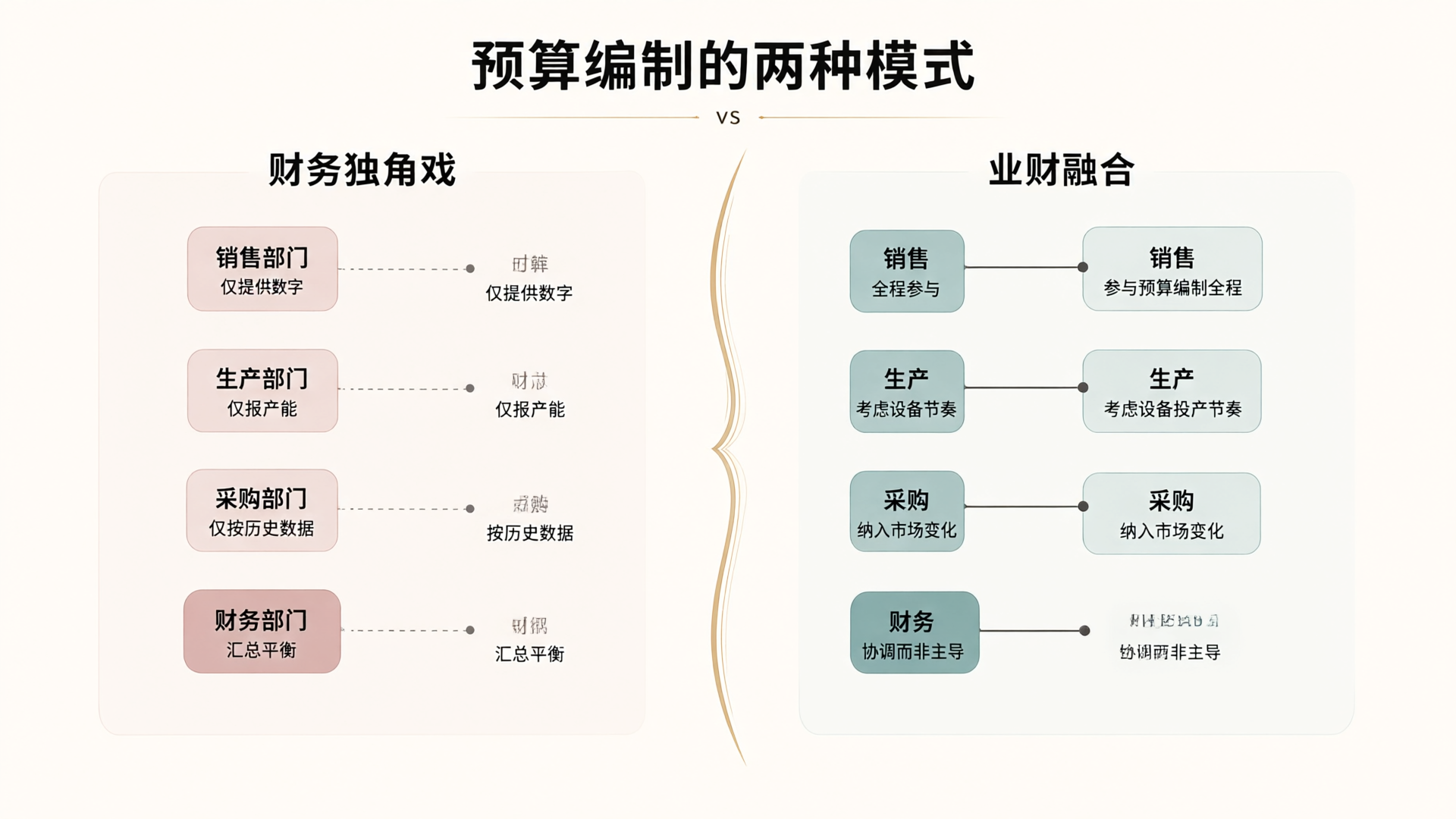
The starting point of budget management is making business units realize that budgeting is "their responsibility." This requires an integrated finance-business mechanism where heads of sales, production, procurement, and warehousing actively participate in every stage of budget preparation—not just submitting a number at year-end.
Myth 2: The core purpose of budgeting is cost control.
A second common misconception is equating budget management with expense control. Under this mindset, management's expectation for the budget is clear: set spending caps to cut costs and boost profit margins. During budget preparation, each department's expenses are reviewed line by line with the goal of reducing them by a certain percentage compared to the previous year.
The flaw in this approach lies in conflating "budgeting" with "cost control." While budget management does include cost-control functions, its core value is optimizing resource allocation. For a manufacturing company, the spending structure across raw materials, labor, equipment depreciation, logistics, and marketing each year reflects strategic choices. Budgeting helps answer key questions: Are these resource allocations aligned with business objectives? Which areas show declining return on investment? And where should additional investment be directed to support growth?
Consider an injection molding company with annual revenue of approximately 1.2 million yuan. In the first two years of implementing budget management, management focused on reducing administrative expenses across departments—office costs, travel expenses, and training budgets declined year over year. However, during the same period, the scrap rate rose from 3.2% to 4.8%, and customer complaints increased by 20%. This occurred because quality control investments in production were cut alongside other expenses, while the actual areas requiring optimization—raw material procurement strategy and process improvements—were not included in the budget analysis.

Cost control is just one aspect of budget management. If a company defines the primary function of budgeting as "cutting costs," it overlooks the more critical value of budgeting: using systematic analysis of business data to identify key variables that drive profit growth.
Myth 3: Budgeting is a one-time task at the start of the year.
The third misconception concerns the time dimension of budgeting. Many small and medium-sized manufacturing enterprises treat budgeting as an annual activity: they begin preparation in Q4, execute after approval at the start of the year, and conduct variance analysis only at year-end. In this model, the budget is a static document that remains unchanged once finalized.
The manufacturing business environment makes static budgets difficult to operate effectively. Raw material prices can fluctuate by more than 20% during the year, and major customers adjust their order schedules in response to market changes. Equipment failures, policy shifts, and currency fluctuations also affect how closely actual performance aligns with the budget. Without a dynamic adjustment mechanism, the gap between budgeted figures and actual results by Q3 may become so large that the budget loses its reference value.
Effective budget management requires regular reviews and rolling revisions. We recommend that companies conduct at least quarterly performance reviews to analyze the root causes of variances—whether they stem from external market shifts or internal execution gaps. For market-driven changes, adjust budget assumptions and resource allocation accordingly. For execution issues, identify specific problems at the operational level and implement corrective measures.
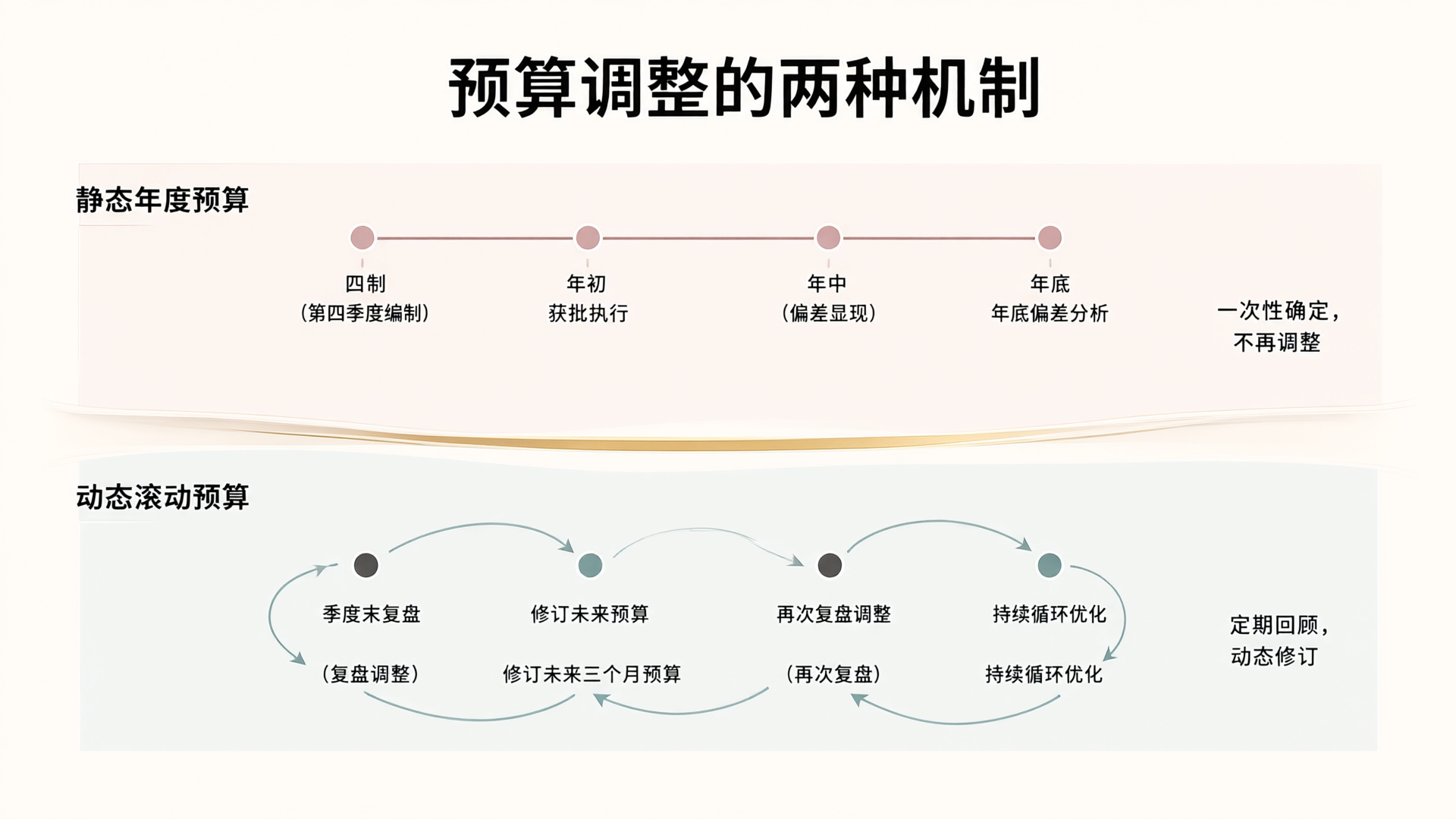
A packaging materials company that we've served offers a positive example. In the first year of implementing budget management, they also faced misalignment between budgets and actual performance. In year two, they introduced a quarterly rolling budget mechanism, revising forecasts for the next three quarters at the end of each quarter based on the latest market intelligence and operational data. After implementation, the budget variance rate dropped from 25% in year one to 8% in year two, enabling budget data to meaningfully support decision-making discussions in monthly operational review meetings.
Key to breaking out of the误区
The common root of these three misconceptions is that companies treat budget management as an isolated financial task rather than a management tool embedded throughout the entire business cycle. Budgeting is not just a spreadsheet created by finance at year-start, nor a lever for cost-cutting, and it certainly isn't an annual document to be filed away once completed.
The essence of budget management is decomposing corporate strategic goals into quantifiable, trackable, and adjustable operational plans. It requires collaboration between business and finance teams, a holistic view of resource allocation by leadership, and the establishment of dynamic feedback and correction mechanisms. For small and medium-sized manufacturing enterprises, clarifying these three core concepts before launching budget management is more critical than selecting a specific budgeting method.