
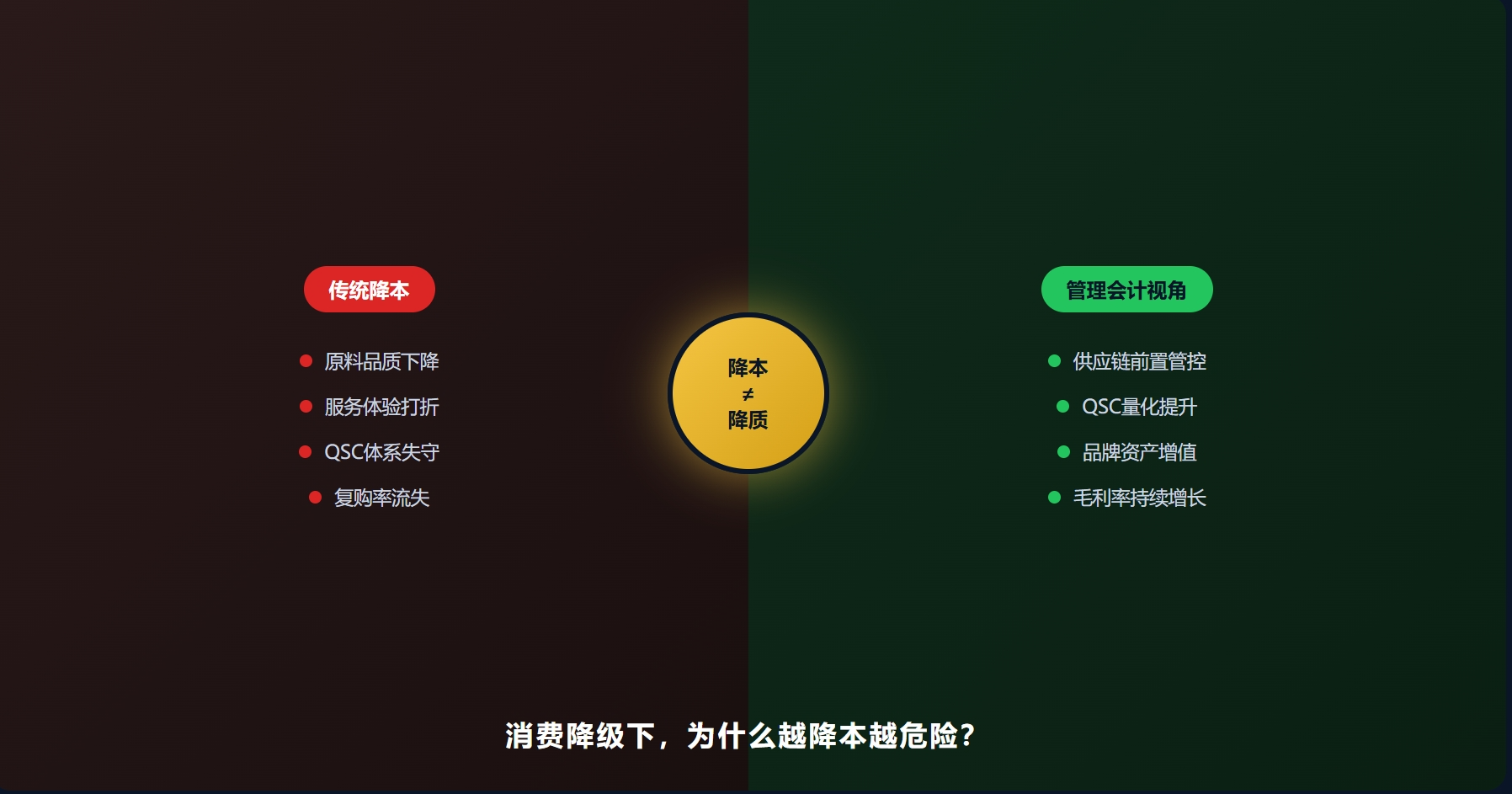
Why Cost-Cutting Becomes More Dangerous Under Downgrading: A COO's Management Accounting Breakthrough
Core SummaryConsumption downgrading does not mean quality downgrading. Traditional "backend compression" cost-cutting is eroding the QSC framework of restaurant businesses. From the dual perspectives of COO and management accounting, and drawing on practical experience in service industries, this article proposes a "Three-Dimensional Value Chain + Four-Dimensional Synergy" model to demonstrate how management accounting tools can achieve the unified goals of controllable costs, quality enhancement, and value growth.
1. A Dangerous Financial Logic: Cut Quality to Cut Costs
In today's context of consumer downgrading, everyone is talking about cost reduction. But we must understand:Consumers' demand for quality remains unchanged.。
What costs should we cut? Where should expenses be blocked? This is a question worth pondering deeply.
In the restaurant industry, if you cut store costs solely to chase profits, you fall into traditional cost management logic. The result? Stores prioritize profit over quality and customer experience, compromising both ingredients and service.
Traditional cost control focuses solely on cutting backend expenses at stores. Short-term spending cuts directly undermine restaurant operations.QSC SystemQuality, Service, and Cleanliness. Declining quality, subpar service experiences, and rising food safety risks ultimately damage brand reputation and customer retention.
This is an extremely poor financial strategy.

[COO Alert]Financial management is a modern approach that drives profit growth through recording, measuring, and reporting business activities—not for control's sake. Sacrificing QSC to cut costs undermines brand reputation and repeat purchases.
Therefore, we must break the traditional mindset that pits financial cost against quality, overcoming their mutual constraints. By adopting a higher-level perspective, we can unify the inherent trade-off between cost and service quality, achieving both cost reduction and quality enhancement simultaneously.
II. Break the False Dichotomy: Cost and Quality Were Never Meant to Be Enemies
From a traditional perspective, cost savings and quality enhancement seem like natural opposites. In reality, however, they are complementary forces within the broader context of customer experience and revenue generation.Highly unified。
To cut costs, we previously focused only on resource-intensive, isolated processes. This fragmented cost management and operations, creating a contradiction between centralized enterprise goals and siloed execution.
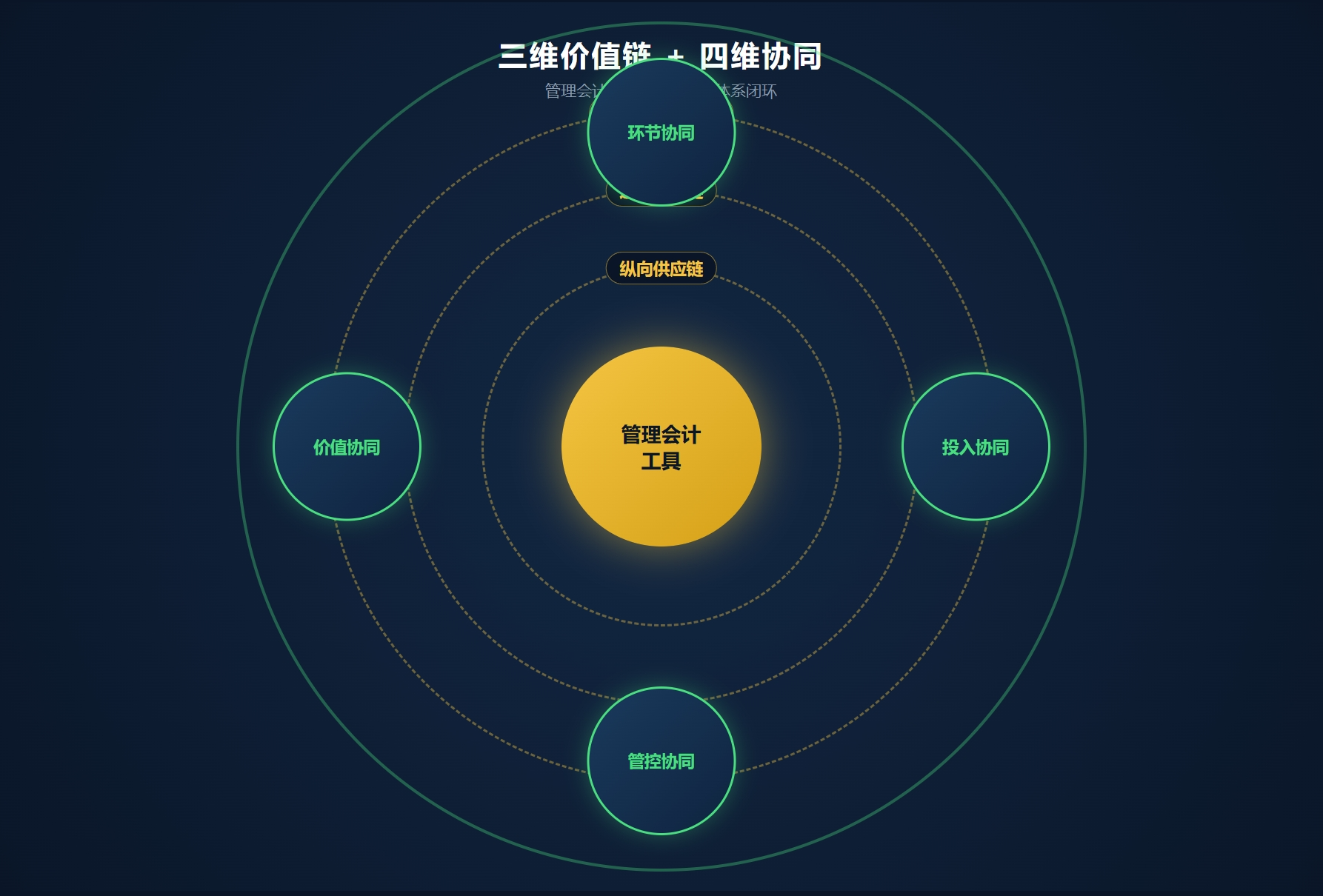
Assuming we center on creating customer value and enhancing long-term business performance, and align under a unified corporate objective, we divide the value chain into:Three dimensions:
- Vertical supply chain value chain
- Operational Value Chain
- Brand Resource Value Chain

Quality, service, and customer experience span all stages of the three-value dimension chain. Management accounting tools serve as the core enabler that connects business operations with financial accounting.
The root of the contradiction is not that cost and quality are inherently opposed, but ratherLack of a collaborative mechanism for end-to-end coordination, quantitative control, and precise resource allocation.This prevents companies from achieving the three transformations:
| Traditional Mode | Management Accounting Perspective |
|---|---|
| Traditional Cost Management | Value Chain Cost Management |
| Cost control remains confined to backend departments. | Push upstream into the supply chain |
| Rely on expert judgment | Shift to digital, data-driven |
| Optimize individual steps | Upgrade to optimized total cost across the entire chain |
3. Practical Model: 3D Value Chain + 4D Synergy
Build3D Value Chain + 4D Collaborative Management SystemSupported by management accounting tools, establish a virtuous cycle: "precise value chain investment → improved QSC levels → enhanced customer value → better business performance."
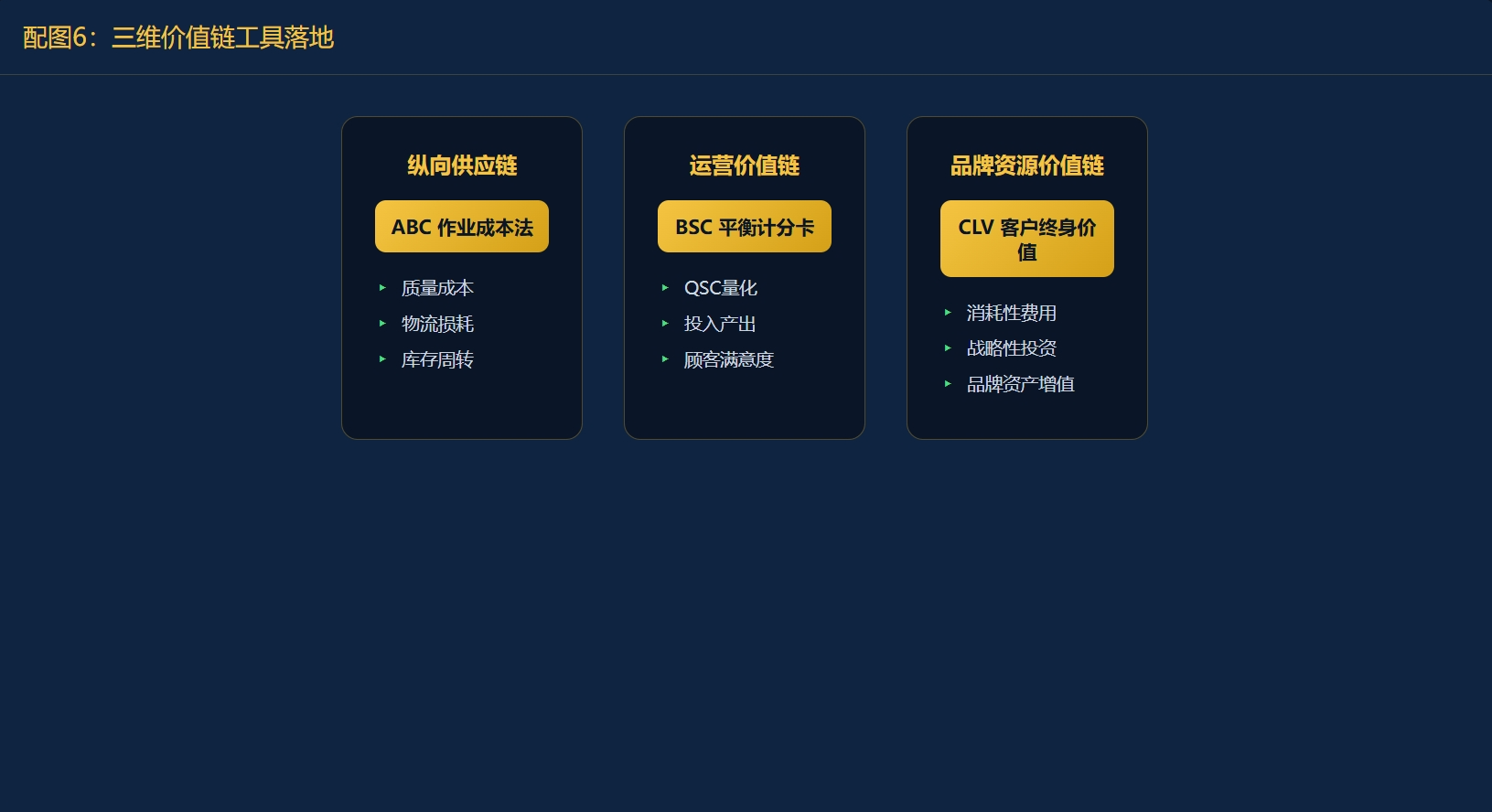
Implementing Management Accounting in a 3D Value Chain
1. Vertical supply chain value chain
- Tools: Activity-Based Costing (ABC)
- PurposeQuantify supplier quality costs, logistics losses, and inventory turnover.
- EffectShift quality control upstream to prevent "low price, high consumption" false cost savings.
2. Operational Value Chain
- Tools: Balanced Scorecard (BSC)
- PurposeConvert QSC standards into quantifiable financial metrics
- EffectBuild an "Input-Output-Experience" model to ensure every unit of operational cost translates into customer satisfaction.
3. Brand Resource Value Chain
- Tools: Customer Lifetime Value (CLV)
- PurposeDistinguish between "consumable expenses" and "strategic investments."
- EffectAllocate resources precisely while safeguarding brand asset growth.
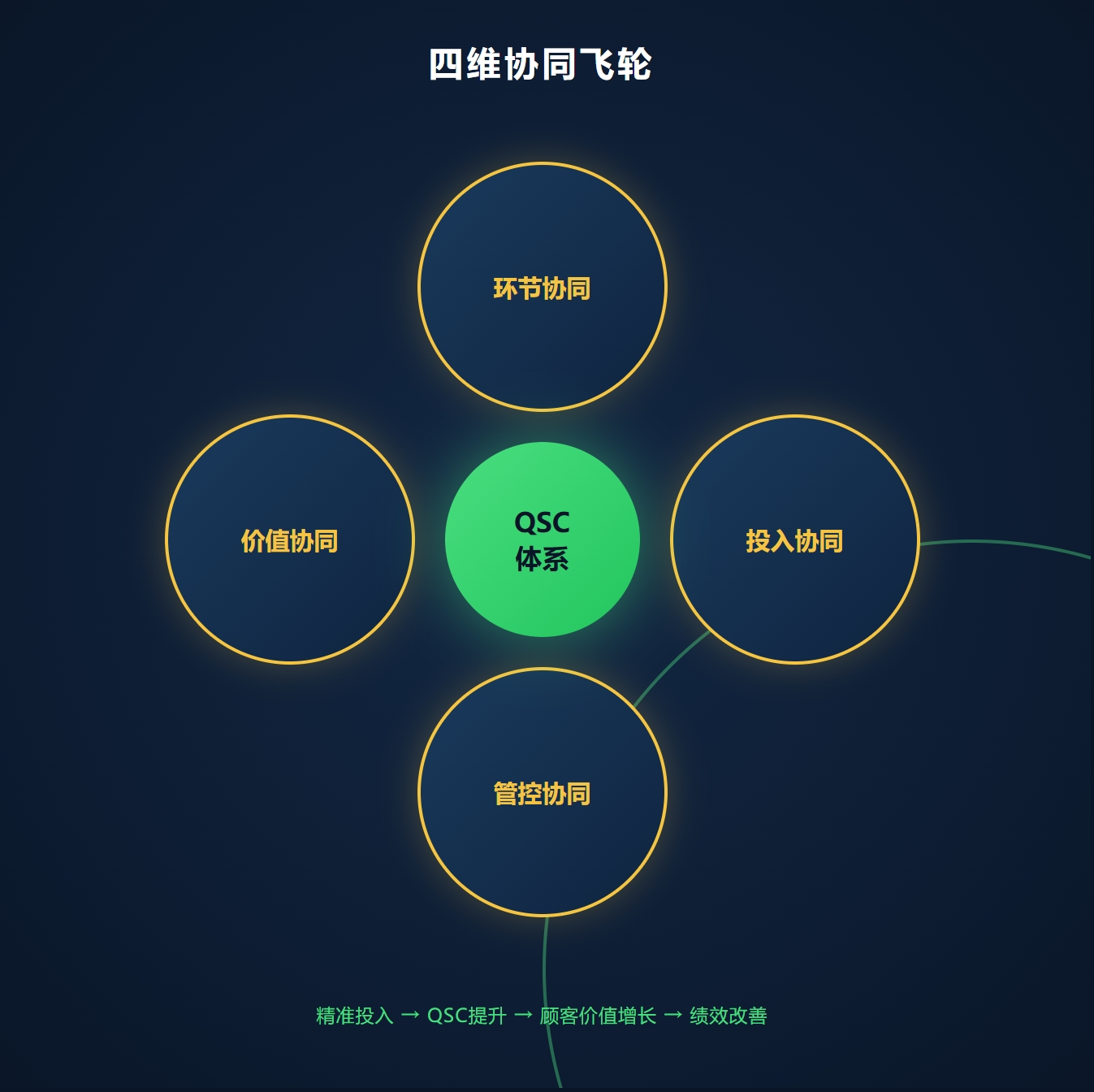
Four-Dimensional Synergy Mechanism
Through the integration of a three-dimensional value chain, ultimately achieve:
- Process CollaborationTransparent information flow across the supply chain to eliminate the bullwhip effect.
- CollaborateAllocate resources to high-value creation activities.
- Controlled CollaborationReal-time mapping of business actions to financial metrics
- Value Synergy: Create a virtuous cycle of "Precision Investment → QSC Improvement → Customer Value Growth → Performance Enhancement"
IV. Conclusion: Don't Choose—Integrate
Companies don't have to choose between cost and quality.
Leveraging full value chain refined management, digital empowerment, and the implementation of management accounting tools to achieveControl costs, upgrade quality, grow valueUnity of the three.
Quality, service satisfaction, and customer repurchase rates outperform traditional financial metrics, driving steady growth in gross profit margin and net income.
This is the true confidence to navigate economic cycles.

Facing a "cost-cutting vs. quality crisis"? Leave a comment or DM us "QSC" to get our diagnostic checklist. Using management accounting tools, we'll help you uncover the overlooked value opportunities.
KeywordsValue chain cost management, management accounting tools, synergy mechanisms, QSC system